5:45 PM: Loading the Van and the Cost of One Missing Supply
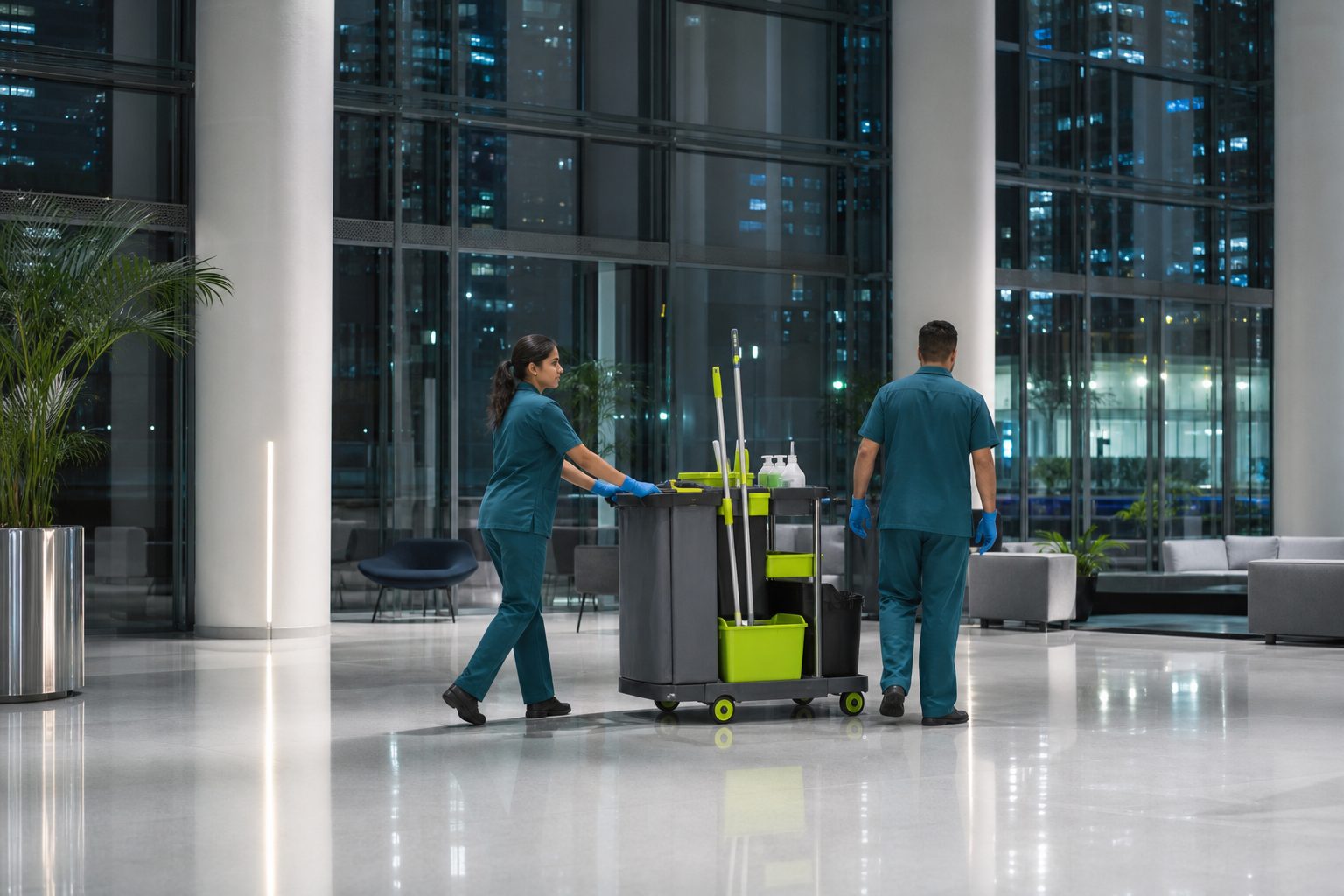
The route starts in the garage, not at the first client. Every evening, two cleaners clock in, check the supply checklist, and load the van. Mop buckets, microfiber cloths, trash liners, and a vacuum are standard. Add-on products for the night's particular accounts, restroom sanitizer, specialty floor pads, glass cleaner, are double-checked against the work order.
One forgotten item can derail the schedule. If a key supply like toilet paper is left behind, the crew loses at least twenty minutes turning back or improvising at a nearby store. When both workers are hourly, the cost of those lost minutes adds up fast: two people idle in traffic, mileage, and a delayed start. A pre-route checklist, whether on paper or a phone, helps prevent this kind of waste. In smaller teams, this step can make or break the night's margin.
Personal protective equipment is checked last. Gloves, masks, and shoe covers live in a tote near the door. Some clients want disposable booties, others require N95 masks for restroom work. Skipping this review means risking a call from the client, or worse, a safety incident that slows the night's progress or leads to incident reports later.
Keep reading: How to Build a Weekly Cleaning Route That Cuts Drive Time
Stop One: Badge Access, Elevators and the First Ten Minutes
The first building on the route is a two-story office suite. Arrival is scheduled for 6:05 PM, right after tenants leave. The cleaners park as close to the main door as possible, knowing that every extra step with the cart chips away at productive time. Access badges are required by the property manager, so the first two minutes are spent swiping in, waiting for the door to buzz, and then entering a security code for the alarm panel.
The elevator is next, and there's usually a wait. If the building's maintenance elevator is locked, the crew must use the public one, sometimes lined with carpet runners that slow down wheel-based carts. Those first ten minutes are often a mix of moving supplies upstairs, propping open the janitor's closet, and greeting any straggling tenants with a friendly but efficient "Good evening."
Unexpected delays happen here. If a badge doesn't work, someone runs back to the van for the backup. If the elevator is out, stairs become the only option, which means extra trips for heavier equipment. Building policies on alarm resets and key fobs are rarely the same from one property to the next, so every route has a learning curve.
Trash and Restrooms: The Two Tasks That Set the Clock
The real time drivers in office cleaning are trash removal and restroom servicing. Emptying trash cans is usually the first job. One person starts at one end of the office, pulling liners and consolidating bags in the hallway. The other checks restrooms for paper supplies and soap levels, then wipes down fixtures and stocks dispensers.
Trash Removal: The Hidden Haul
Trash can count, distance to the dumpster, and recycling protocols all eat into the schedule. In a typical small office, there are at least a dozen desks and several common areas. Each can needs a new liner. The collected bags go out to a rear loading dock or, in some cases, to a locked trash room. Some buildings require a code or a second badge to access these rooms, which adds another step. When the dumpster is on the far side of the property, the walk can take five minutes or more, especially if the path is blocked or icy in winter.
Restroom Service: No Skipping Steps
Restrooms take precision. Each fixture must be wiped, toilets and urinals sanitized, and floors mopped. Skipping any step leads to complaints. In many buildings, teams follow a color-coded rag system: blue for glass, red for toilets, green for sinks and counters. This standard prevents cross-contamination but slows the process, especially if the cleaners are new or the restrooms see heavy use. At least ten minutes per restroom is common, with large restrooms or multiple stalls adding more time.
The crew checks for clogged toilets, missing soap, and graffiti. Any issues are noted for follow-up, sometimes requiring a call to building maintenance. This is the point where minutes can slip away, especially if supplies run low or a messy accident requires extra attention.
Keep reading: Production Rates: Square Feet Per Cleaner Hour by Task
Vacuuming Patterns and the Cord Versus Battery Question
Vacuuming is the next major time block. In open-plan offices, one person starts with a backpack vacuum at the farthest end and works toward the exit, zigzagging to cover carpeted areas. The second person might use a stick vacuum or sweep hard floors, depending on the client's request.
Corded Vacuums: The Tangle and the Tagalong
Corded vacuums have the power for deep cleaning, but cords catch on chairs and under desks. In tight spaces, one cleaner moves furniture while the other vacuums, but this means both are tied up in one area. Moving the cord from outlet to outlet adds minutes, and care is needed near sensitive electronics. When there are several offices or conference rooms, the process repeats for each, and the time per room rarely shrinks, no matter how many times the crew has done it before.
Battery Power: Speed Versus Stamina
Battery-powered units are more mobile but limited by charge. On a long route, cleaners must plan for recharging or carrying spare batteries. A battery vacuum might last through two small offices before power runs low. The team then swaps batteries or reverts to a broom and dustpan for hard floors. This stops and starts the workflow, creating small gaps where time is lost but hard to track on a timesheet.
Vacuuming high-traffic areas like lobbies, break rooms, and hallways is always required, and clients often notice if this step is missed or rushed. One person usually handles the main traffic lanes while the other spot-checks edges and under furniture, but both must coordinate so no area is skipped.
Between Stops: Traffic, Parking and Paid Drive Time
After finishing the first building, the crew heads to the next stop. In theory, this is a simple drive. In reality, traffic and parking create unpredictable delays. Even on a well-planned route, rush hour or a sporting event can slow progress, turning a ten-minute drive into twenty or more.
Both cleaners are paid for this time, but it is not billable to the client. Some companies use GPS or route apps to track drive time and adjust schedules, but the difference between map estimates and real-world traffic often costs the company more than planned. Parking at the next site can be another hurdle. A full lot means circling for spaces, unloading supplies farther from the door, and increasing the time from van to office. In downtown locations, paid parking eats into profit as well as time.
Each stop means unloading the cart again. Stairs, locked doors, and narrow hallways are all common. If supplies were not restocked at the start, this is often when the missing item is discovered, forcing a run to a nearby store or a call to the office for help.
See how MopRoute handles this for commercial cleaning
The Last Building: Fatigue, Shortcuts and Quality Drift
The final property of the night is where the schedule feels tightest. Fatigue sets in, and both cleaners know that the last thirty to sixty minutes determine whether the route finishes on time or runs late. The urge to skip small tasks is strongest here: spot vacuuming instead of a full pass, wiping only visible surfaces, or topping off supplies without checking the stock room.
Experienced teams fight this tendency by sticking to a routine. A written checklist or a phone app helps, prompting the crew to check each room, restroom, and trash can. Still, quality can drift. High-touch areas like door handles, phone receivers, and light switches are easy to overlook when tired. A missed detail at the last stop often results in a client call the next day, undoing hours of good work with one slip.
Shortcuts may seem harmless in the moment but add up over weeks. Repeat issues can cost a contract, or at minimum, require a supervisor's visit and retraining. Many owners find that fatigue-related errors are most common after a long drive or a building with unusually demanding specs, such as medical suites or labs.
Lockup, Alarm Codes and the Photo Check Before Leaving
Before leaving each building, the crew must restore security. This means locking doors, resetting alarms, and sometimes checking in with a security guard. Each property has its own alarm code, and entering it wrong can trigger a call from the monitoring company or the police. Double-checking windows and secondary exits is part of the routine, especially in buildings with a history of after-hours incidents.
Many clients now require a final walk-through with a smartphone. The cleaners take photos of main areas, restrooms, break rooms, lobbies, to show that surfaces are clean and supplies are stocked. These photos serve as proof of completion, help resolve disputes, and make it easier to track which areas were serviced on a given night. For owners, photo verification can be the difference between a paid invoice and a disputed charge.
The last action before leaving is a text or app check-in. This signals the office that the crew is done, and the building is secured. If a checklist app is used, both cleaners review the work order and mark each task as complete. This step keeps accountability high and makes it easier to spot recurring issues that might need extra training or supplies in the future.
Adding It Up: Billable Minutes Versus Clocked Minutes
At the end of the night, the gap between billable and clocked time becomes clear. Owners pay for every minute the crew is on the clock: loading the van, driving, waiting for access, cleaning, and handling security. Clients, on the other hand, pay only for the time spent inside their building, often a set fee per visit, regardless of delays.
The time spent on non-billable work eats into margins. Missed supplies, long walks to the dumpster, elevator waits, and extra drive time all add up over a week. For a two-person team running three to five stops per night, even a five-minute delay at each location equals half an hour of lost time per shift. Over a month, this is several hours of payroll that cannot be billed to any client.
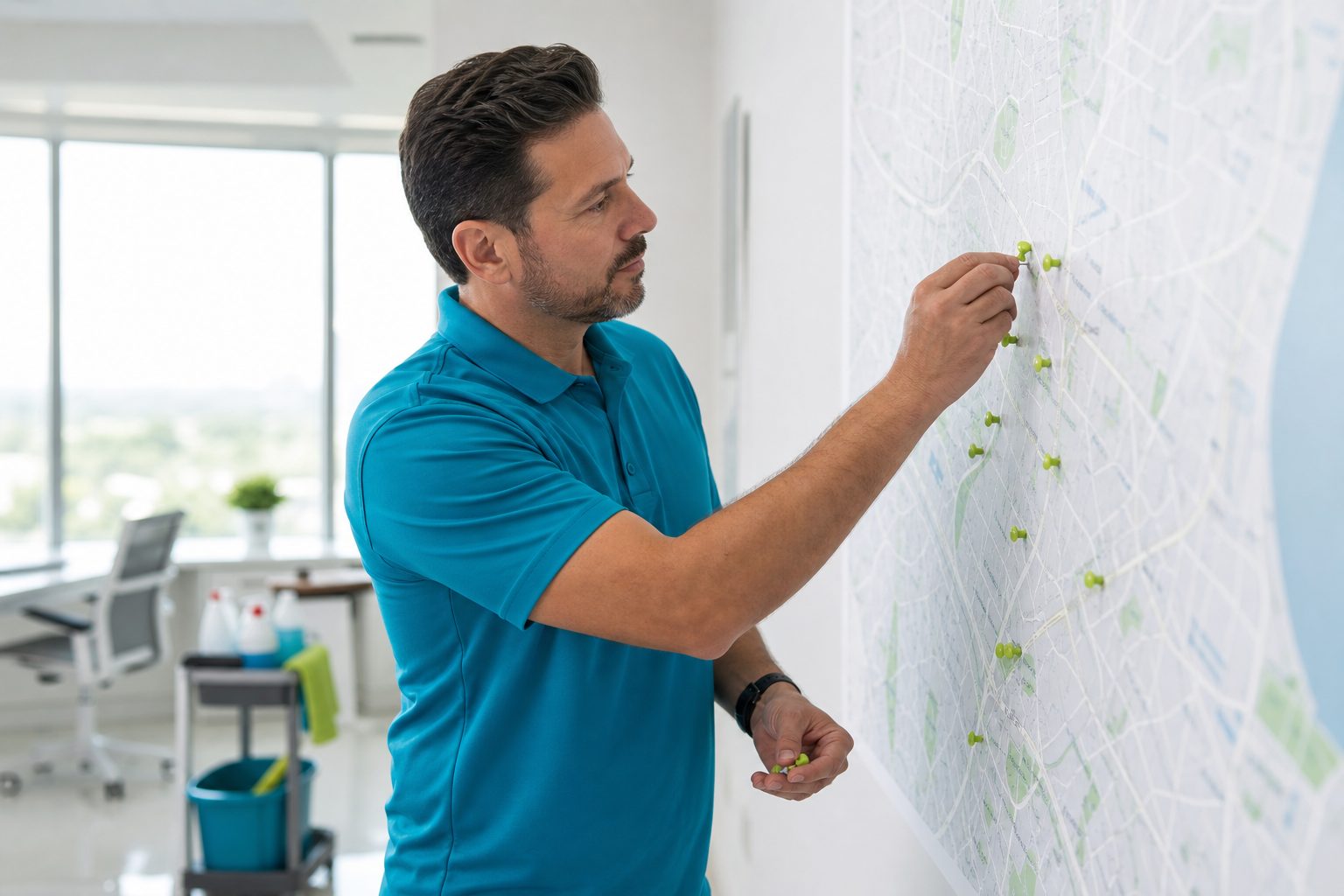
Owners who track actual minutes per building spot patterns quickly. Some properties always take longer due to layout or access rules. Others are fast but unprofitable because of parking costs or long drive times. The most successful operators match route schedules to the realities of each stop, adjusting assignments, checklists, and supply lists as needed to control labor costs and maintain quality.
Tools that combine recurring route scheduling with per-property checklists and photo-verified completion help keep teams on track and owners informed. These systems make it easier to spot where time is lost, hold staff accountable, and streamline the nightly routine, without missing a single detail along the way.