Who the Standard Covers and Why Janitorial Work Is Included
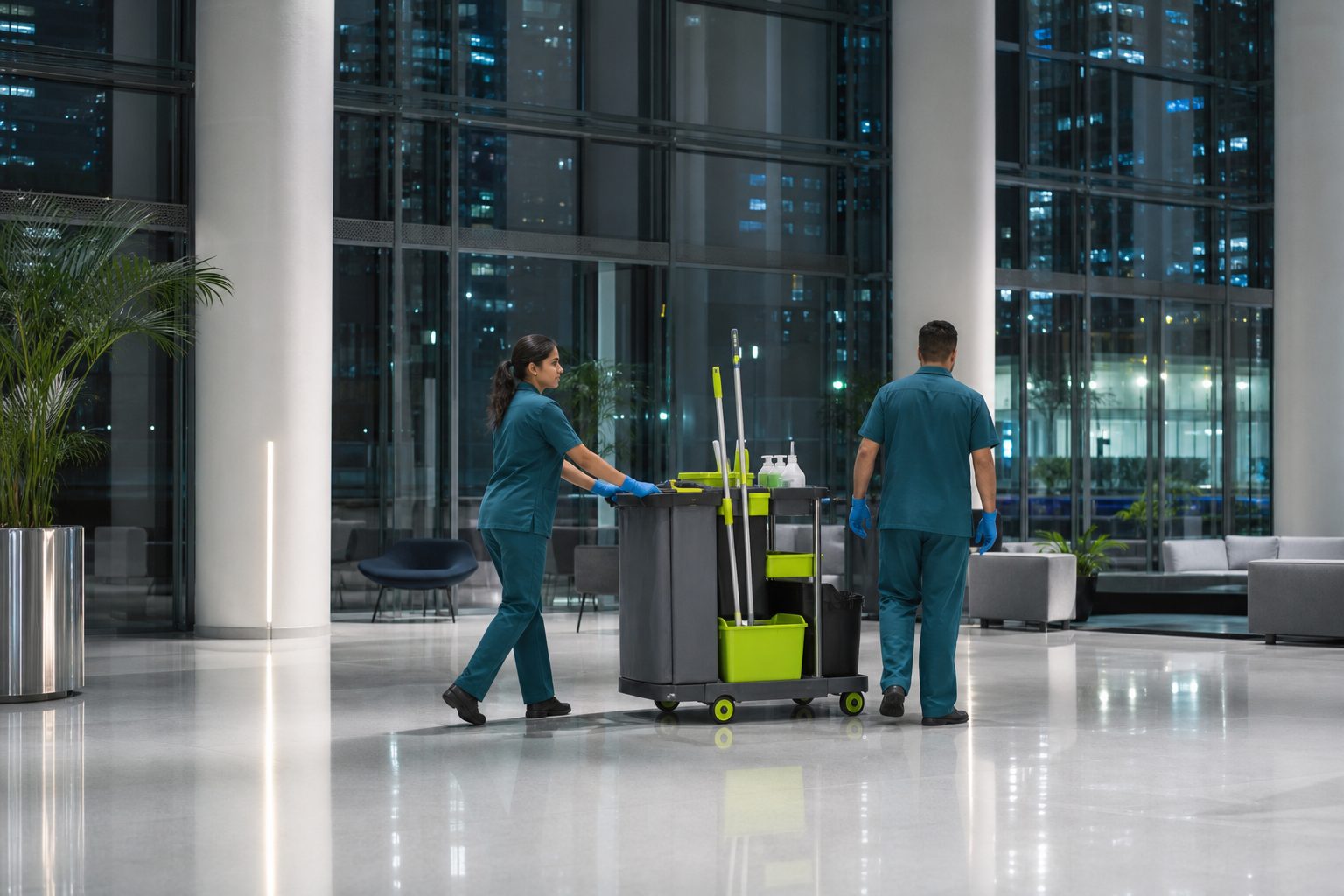
The OSHA Hazard Communication Standard, or HazCom, applies to any workplace where employees can be exposed to hazardous chemicals. This includes small cleaning companies, not just large factories or chemical plants. Even a business with two cleaners that uses disinfectants, degreasers, or floor strippers comes under this regulation.
Janitorial and commercial cleaning work routinely involves chemicals that can cause health effects or physical hazards. OSHA views this exposure no differently from any other profession that handles such products. If a crew member could be splashed by a chemical, breathe in fumes, or get something on their skin, the rules apply in full.
It does not matter if you buy your products at a janitorial supply shop or a big box store. The standard follows the chemical, not the supplier. Even if you only use a few products, as soon as they have hazardous properties, the requirements are in force.
Keep reading: Move Out Cleaning Checklist for Apartment Turns, Room by Room
The Written Hazard Communication Program in Plain Terms
OSHA requires every employer with hazardous chemicals in the workplace to have a written hazard communication program. This document spells out how your company will handle labels, safety data sheets, training, and chemical lists. It does not have to be long, but it must exist and be specific to your operation.
The written program should include the following:
- A list of all hazardous chemicals known to be present at each property or on each route
- Methods for labeling containers and making sure labels stay readable
- How safety data sheets are obtained and made available to employees
- Procedures for training crew members on chemical hazards and safe handling
- Steps for updating the program when new chemicals are introduced or procedures change
This plan needs to be accessible to employees during their regular shift. It can be kept in a binder in the supply room or stored electronically on a device if everyone can reach it easily while working. OSHA expects that any employee, at any time, can show how to get to the written program if asked.
Safety Data Sheets: Getting Them, Keeping Them, Reaching Them on Shift
Every hazardous chemical must have a safety data sheet, or SDS, provided by the manufacturer. These documents explain the hazards, safe handling steps, emergency procedures, and what to do in case of a spill or exposure. You cannot just keep the product label or a generic sheet; it must be the full SDS for each specific product and brand.
How to Obtain SDSs
When you buy a product, ask the supplier for the SDS if it is not included automatically. Many larger manufacturers post these sheets online. For chemicals purchased at retail, check the manufacturer's website or request it by phone or email. If you use a private label cleaner, get the SDS from the distributor.
Where to Store SDSs
SDSs must be kept in a location where your crew can get them quickly during any shift. This could be a paper binder in a mop closet, a folder in the van, or a digital file on a phone or tablet. The key requirement: no one should have to leave the jobsite or call the office for access in an emergency.
Keeping Them Up to Date
Review your SDS collection any time you switch products or start a new contract requiring different chemicals. Remove sheets for products you no longer use. If a manufacturer updates a product formulation, request the new SDS and swap out the old one. Organize the sheets so employees can find the right one by product name.
Keep reading: Where Cleaning Labor Costs Are Headed: Wage and Leave Laws
Shipped Container Labels and the Six Required Elements
Every original container from the supplier must have a label with specific information. OSHA sets out six required elements for these labels under the Hazard Communication Standard using the Globally Harmonized System format. These are:
- Product identifier (the name or code that matches the SDS and your inventory list)
- Signal word (either "Danger" or "Warning" to indicate hazard level)
- Hazard statements (descriptions of the main risks, such as "Causes skin irritation" or "Highly flammable liquid")
- Pictograms (the diamond-shaped symbols for hazards like corrosive, toxic, or flammable)
- Precautionary statements (instructions for safe use, storage, and emergency response)
- Name, address, and phone number of the manufacturer or importer
Do not remove, deface, or cover up these labels. If a label becomes unreadable, replace it immediately. If you transfer product from a big drum into smaller bottles or buckets, those must also be labeled if they will leave your hands or be used by someone else.
Part of your written program should describe how you check labels and what to do if one is missing or damaged. Many shops do a monthly walk-through of the supply area to review labels and checklists.
Secondary Bottles on the Cart and the Immediate Use Exception
Cleaning products are often transferred from bulk containers into spray bottles, mop buckets, or other portable containers. OSHA defines these as "secondary containers." Once a chemical leaves its original packaging, the rules for labeling shift to you.
Labeling Secondary Containers
If the product will be used by more than one person, or if it will be kept for later use, you must label the secondary container. The label must include, at a minimum, the product identifier and any hazard warnings. Many businesses use pre-printed labels or permanent markers to write the name and key hazard on the bottle.
For chemicals with more serious hazards, such as corrosives or strong oxidizers, include the main health and physical risks. The label should match up with your SDS and inventory list so crew members can cross-reference as needed.
The Immediate Use Exception
If a secondary container is filled and used up by the same person during a single shift, and the person never leaves it unattended, OSHA allows you to skip the label. This is the "immediate use" exception. For example, if a crew leader mixes a mop bucket at the start of a job and dumps it when finished, no label is required.
However, if the container will be left for someone else to use, or stored for future shifts, even overnight, it must be labeled. This is one of the most common mistakes found on cleaning routes, especially when bottles are left behind in closets or utility rooms.
See how MopRoute handles this for commercial cleaning
Training at Hire, at New Product, and in a Language the Crew Understands
OSHA requires you to train every employee who may be exposed to hazardous chemicals. Training must cover the hazards, how to read labels and SDSs, safe handling procedures, and what to do in an emergency. This is not a one-time event: you must repeat training when a new chemical is introduced or if a process changes.
Training is required:
- When a new employee is hired, before they start using chemicals
- When the company brings in a new product or changes the way an old one is used
- If there are updates to the written program or new hazards discovered
All training must be provided in a language and at a level the employee understands. OSHA will look for evidence that every crew member, regardless of their primary language, can explain where to find SDSs, what the label symbols mean, and basic safe handling steps. Visual aids and hands-on demonstrations often help, especially with workers who are not fluent in English.
Keep records of who attended training, the date, and the topics covered. Many shops use sign-in sheets or digital logs for this purpose. If an inspector asks for proof, these records show that the company is meeting its obligations.
Chemical Inventory, Dispenser Rooms and Storage Basics
Every cleaning company must keep an up-to-date inventory of hazardous chemicals present in each workplace or on each route. This list ties together your SDSs, written program, and training efforts. It should match what a crew member could find in a janitor closet, van, or storage room at any site you serve.
Building the Inventory
List each hazardous chemical by product name, manufacturer, and the main area or property where it is stored or used. Update the list whenever you add or remove a product. Every entry should match a corresponding SDS and label so that there is no confusion between similar products.
Managing Dispenser Rooms and Storage
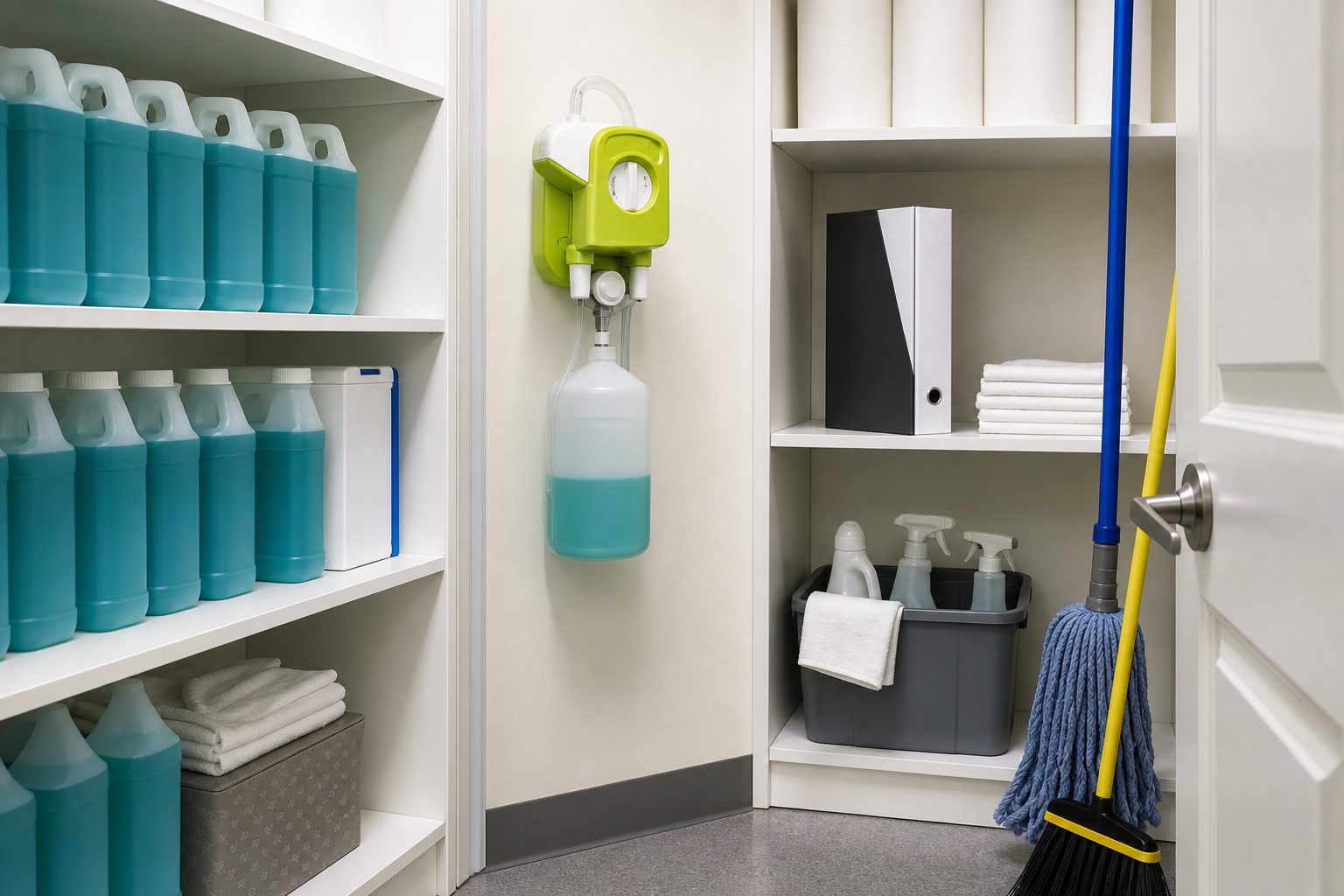
Store chemicals in well-ventilated rooms or secured closets, away from food and personal items. Separate incompatible chemicals, such as bleach and ammonia, to prevent accidental mixing. Keep containers closed when not in use and make sure labels are always visible from the front.
If you use dilution stations or wall-mounted dispensers, include these setups in your inventory and make sure the SDSs are nearby. Inspect storage areas regularly for leaks, spills, or damaged containers. Even a small leak can create a hazard for your crew and trigger attention during an inspection.
What an Inspector Asks to See First
The first thing an OSHA inspector usually requests is your written hazard communication program and the list of hazardous chemicals. The inspector will want to see that your program matches what is actually in your storage areas and on the active route. If you have digital records, show the inspector how an employee on site can access everything without delay.
Next, the inspector will check for SDSs and confirm that they are available to employees at all times. They may quiz your crew to see if they know where to find the sheets and understand what the main hazards are for common products. Inspectors often pick a random secondary container and ask to see its label. If they find an unlabeled bottle, they will ask why it was not marked and if it meets the immediate use exception.
The inspector will look at your training records to confirm that all employees, including new hires and temporary staff, received the required instruction. They may ask questions in the employee's primary language to make sure the information was understood. Storage areas will also be checked for proper chemical segregation, condition of labels, and overall safety practices.
While OSHA enforcement may seem intimidating, many companies get cited for issues that can be avoided with regular checks, clear documentation, and up-to-date records. The best defense is a program that matches what actually happens on the job and is easy for every crew member to use.
Some cleaning businesses keep their chemical lists, checklists, and SDS access integrated alongside their scheduling and property notes. This reduces paperwork and helps ensure that compliance information always travels with the crew, especially as routes and jobsites change.